
Sharing knowledge, saves lives

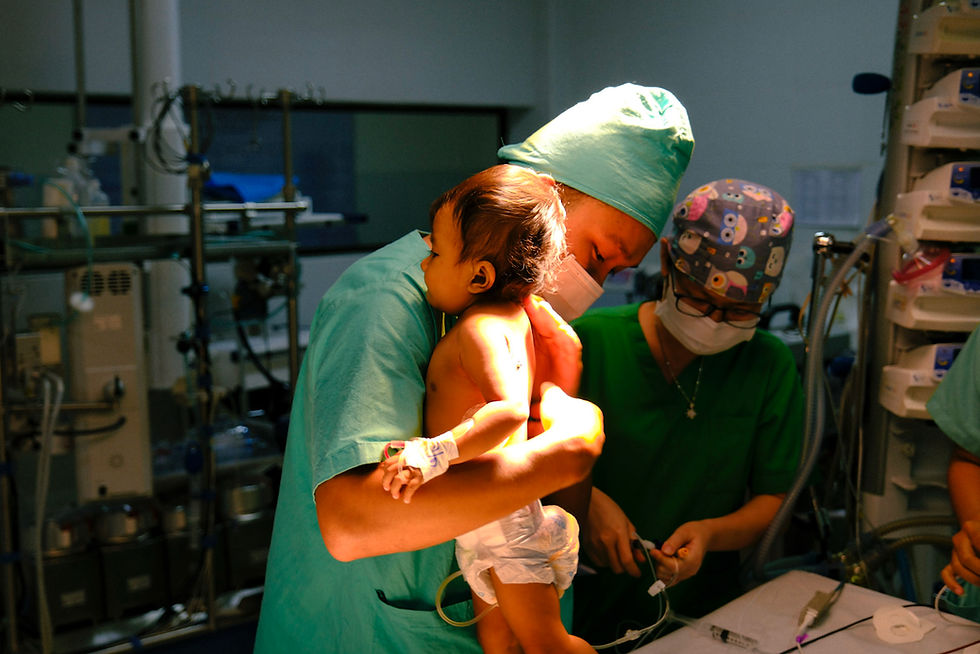
The number of cases of the dangerous dengue fever rose by nearly 50 percent in 2026 compared to the previous year. Children, in particular, bear the brunt of this wave of infection and account for a large proportion of severe cases. At the Kantha Bopha hospitals in Phnom Penh and Siem Reap alone, over 24,000 dengue patients were treated between January and August, including more than 1,000 children suffering from life-threatening dengue shock syndrome (DSS).
Training Campaign in Eight Provinces
To improve medical care at the first point of contact for sick children, our children’s hospitals launched a large-scale training program at the initiative of the Ministry of Health. In August 2026, Prof. Dr. Yay Chantana and his team traveled to eight provincial hospitals and health centers, including those in Battambang, Kampong Thom, and Pursat. The approach was consistently practice-oriented:
On-site clinical rounds: In the mornings and afternoons, the experts assessed the children directly at their bedsides in the provincial hospitals to hone the staff’s diagnostic skills in a real-world setting.
Focus on early detection: In addition to treating shock, the main emphasis was on recognizing early warning signs and ensuring accurate documentation by the nursing staff. Discussions also took place at the respective provincial health departments.
“Training-of-Trainers” concept: A total of 568 physicians, nurses, and other medical professionals (108 on-site, 460 via video conference) were trained. They are now passing this knowledge on to their own teams.
For Hospital Director Prof. Dr. Chantana, the mission was not a one-way street. In addition to sharing knowledge, the goal was to understand the often limited resources and the real challenges faced by smaller hospitals. “My impression was very positive. The medical staff was highly motivated and interested in improving the treatment of dengue fever in children.”
The insidious nature of the disease: Why every hour counts
Our teams have extensive experience treating children with dengue fever, including severe and complicated cases. One of the biggest challenges is the unpredictable course of the disease, which requires continuous reassessment, says Prof. Dr. med. Yay Chantana, director of Jayavarman VII Hospital in Siem Reap. “The condition of a child who initially appears clinically stable can deteriorate rapidly. Early recognition of warning signs, appropriate fluid management, and close monitoring can prevent many serious complications.”
When blood plasma leaks through inflamed blood vessels, there is a risk of circulatory collapse. But the opposite also poses dangers: excessive or improper fluid administration can quickly overload a child’s cardiovascular system. Striking the right balance in intensive care requires in-depth clinical experience.
Praise from the Minister of Health
During a visit to our Jayavarmann VII Hospital in Siem Reap, the Cambodian Minister of Health, Prof. Chheang Ra, recognized the dedication of our team and praised them for their professional expertise and commitment to equitable health care in the country. He also visited the emergency room, where many critically ill dengue fever patients are currently being treated, and said, “Here, children are being saved with compassion, expertise, and hope.” He expressed his deep appreciation and acknowledged the heavy burden placed on the medical staff during this difficult time.
Prof. Chheang Ra also met with trainers and trainees from several provinces and encouraged them to share their newly acquired knowledge with the healthcare teams in their respective regions. The purpose of the visit was to offer support, convey greetings, and express gratitude to the medical staff dedicated to serving children. In addition, the minister reaffirmed his support for ongoing efforts to strengthen and improve the quality of emergency care for children. At the same time, he called for intensifying preventive measures, strengthening health education, and preventing the transmission of dengue fever through close cooperation between hospitals and local authorities.
The Kantha Bopha hospitals are thus once again demonstrating their role as the backbone of Cambodia’s healthcare system. Their mission is to strengthen provincial hospitals through training, practical collaboration, referral networks, and a continuous exchange of expertise. In this way, the knowledge we have gained from treating a large number of young patients can benefit children throughout Cambodia—ensuring that every girl and boy, regardless of where they live or their parents’ financial means, receives timely, life-saving, and appropriate treatment.


A clear explanation of network configuration can make troubleshooting much less frustrating. When an address such as 192.168.o.1.1 appears in search results, checking the router manual first is a sensible way to avoid following instructions that do not match the device.
mình có lần lướt đọc mấy trao đổi trên mạng شيخ روحاني thì thấy nhắc nên cũng tò mò mở ra xem thử cho biết. mình không tìm hiểu sâu chỉ xem qua trong thời gian ngắn để quan sát bố cục cách sắp xếp جلب الحبيب các mục và trình bày nội جلب الحبيب dung tổng thể. cảm giác là các phần được trình bày khá gọn, các hurentest berlin mục rõ ràng Huren Berlin nên đọc lướt cũng không bị rối với mình như vậy là đủ để nắm tin cơ bản rồi. جلب الحبيب
👍
This brings out the fact that timely sharing of info and practical training in the medical field can save many lives. We are seeing an increase in dengue cases which also brings to light the issue of local hospitals and medical staff not having access to current practical advice. In my take the greatest element of this program is that experts went to which various locations for hands on training as opposed to just passing out info. Also we see this play out in other fields which may include health care or a professional service like CV writing service Dubai; at large the timely exchange of info does in fact bring positive change.
Really valuable content here https://en.wikipedia.org/wiki/Web_design I was searching for information on this topic and your article answered many of my questions. Keep up the excellent work!
Really valuable content here https://en.wikipedia.org/wiki/Web_design I was searching for information on this topic and your article answered many of my questions. Keep up the excellent work!