
Visiting? On a medical mission! Part 1
Introduction
Even before I left, I knew that, unlike most of my predecessors, I would be the only Swiss medical student here during the first of my two months. That’s why I was even slightly more nervous than one usually is before a big trip. I worried and wondered how well I would connect with the locals and whether I would find people to do things with outside the hospital. Or whether I would still have the energy in my free time to make new friends. But I was welcomed so warmly that my worries quickly vanished.
On the very first day, I was told that a Swiss professor would be visiting soon. I knew this was Professor Ueli Möhrlen from the University Children’s Hospital Zurich (Kispi). A few months earlier, I had spoken with him in his lab, the Tissue Biology Research Unit, where I’m completing my master’s thesis. We had figured out back then that we would meet again in Cambodia. When I told this story the morning before the big report, the hospital’s chief of surgery, Prof. Keo Sokha, immediately suggested with tremendous enthusiasm that I join the “5th Pediatric Laparoscopy and Thoracoscopy Mission at 7th Jayarman Hospital” during my second week. So it didn’t take long before someone would understand my Swiss German again.

Monday
Prof. Möhrlen has been Director of Surgery at Kispi since 2021; he is a specialist in visceral, thoracic, and fetal surgery, Co-Director of the Center for Fetal Diagnostics and Therapy, and a professor at the University of Zurich. On the Monday after his arrival, just as I was on my first day here, he was welcomed by the entire hospital staff at the big morning briefing—right after the national anthem, which is sung every Monday morning. The specialist was invited to help advance the skills of local surgeons in minimally invasive surgery. A small delegation from Phnom Penh has also traveled here to participate in these training sessions. Dr. Denis Laurent, the director of both hospitals, will be joining us as well.
After the morning briefing, the well-prepared grand rounds began. Cases scheduled for minimally invasive surgery were reviewed. During this process, indications were discussed, and decisions were made regarding who would undergo surgery and when. Twenty-five girls and boys were on the list. The team went from bed to bed. The attending physicians introduced the children and translated for Prof. Möhrlen and the parents when additional questions arose. Everyone else took notes diligently. The children were examined, and I benefited the most from this, as I had never before had so many doctors explain the examinations and findings to me in detail at the same time. The images from radiology were also discussed together. Only for a few patients did Prof. Möhrlen see a need for a more detailed evaluation with the radiologists. The surgeons do not have regular meetings with the radiologists—a first suggestion that Prof. Möhrlen noted for the meeting on Wednesday.
It was time for the first surgery. The operating room was packed, and this scene remained a constant throughout the entire medical mission. At times, there were as many as ten doctors gathered around the patient, trying to get a good view of the surgery and the monitors. Add to that the support team – including anesthesia and OR nurses – and myself, and the room was filled with up to twenty people. It was quite a sight. The images reminded me a bit of the “Where’s Waldo?” books or a Renaissance painting. “That wouldn’t be possible in Switzerland,” the professor told me.

After that, we had lunch. It was very important to Prof. Sokha that we all went to the cafeteria together during the mission. I can’t describe just how different the cafeteria here is compared to those in Switzerland. But every day we enjoyed a home-style lunch in good company. It was delicious and authentic, and there was always enough that neither the professor nor I needed a snack afterward.
In the afternoon, we returned to the OR, and between surgeries we visited the neonatal intensive care unit to see more patients. Before the end of the workday, we had a meeting with the radiologists to round out a successful first day.
We settled into a good rhythm for the coming days: After the big morning report, Prof. Möhrlen joined us. We held a brief rounds session, mostly with the children scheduled for surgery that same day and those who had just been admitted. Afterward, we went to the operating room, then had lunch, and returned to surgery. And after the official end of the workday, Prof. Möhrlen was still able to attend to his most important duties at Kispi due to the time difference.
Tuesday
Today I had the opportunity to observe a surgery. It was very important to me not to get in the way of the doctors’ discussions with the professor. And I was aware that, in terms of training, I wouldn’t receive the same level of attention this week as I had the previous week in the intensive care unit. The goal was to learn minimally invasive surgical techniques. Later in the day, General Director Dr. Denis Laurent arrived. After lunch, we met for the first time to discuss which topics needed to be addressed at the scheduled meeting the following day. And during a visit to the neonatal unit, we ran into each other again, along with a sales team for medical devices. Here, too, Prof. Möhrlen was immediately asked for advice.

Wednesday
In addition to the surgeries, today’s focus was on the major meeting, which I attended. Dr. Laurent emphasized that everything was being handled transparently and that Prof. Möhrlen had no supervisory or evaluative role, but was participating in this meeting solely in a strategic advisory capacity. I found the meeting with the hospital administration extremely interesting and insightful. Many different aspects and ideas were discussed and put on track. Part of the mission was also for Prof. Möhrlen to conduct a needs assessment with the team.
The increasing importance of minimally invasive methods was discussed, as well as a possible future mission, perhaps even later this year. Prof. Möhrlen would like to bring an experienced anesthesiologist and an experienced surgical nurse on his next visit so that the exchange and continuing education can also take place optimally at these levels. This is also in view of a small construction project to ensure that oxygen and compressed air are supplied to the operating rooms via piping rather than gas cylinders in the future. Input from the anesthesia department would be very valuable for this.
There was also discussion of a potential collaboration in the field of pediatric urology, as well as topics such as burn care, capacity expansion, documentation, and processes. Another important point was the role of clinical examinations and patient consultations and how this information is shared within the team.
Thursday
On Thursday, Prof. Möhrlen’s ideas were revisited during the morning briefing. Unfortunately, I don’t understand the language, but it’s wonderful to see how valuable the discussion is. In the afternoon, the operating room building was cleaned, and we took the opportunity to catch up on administrative work. Then we met for dinner, which included an Apsara dance performance.
Friday
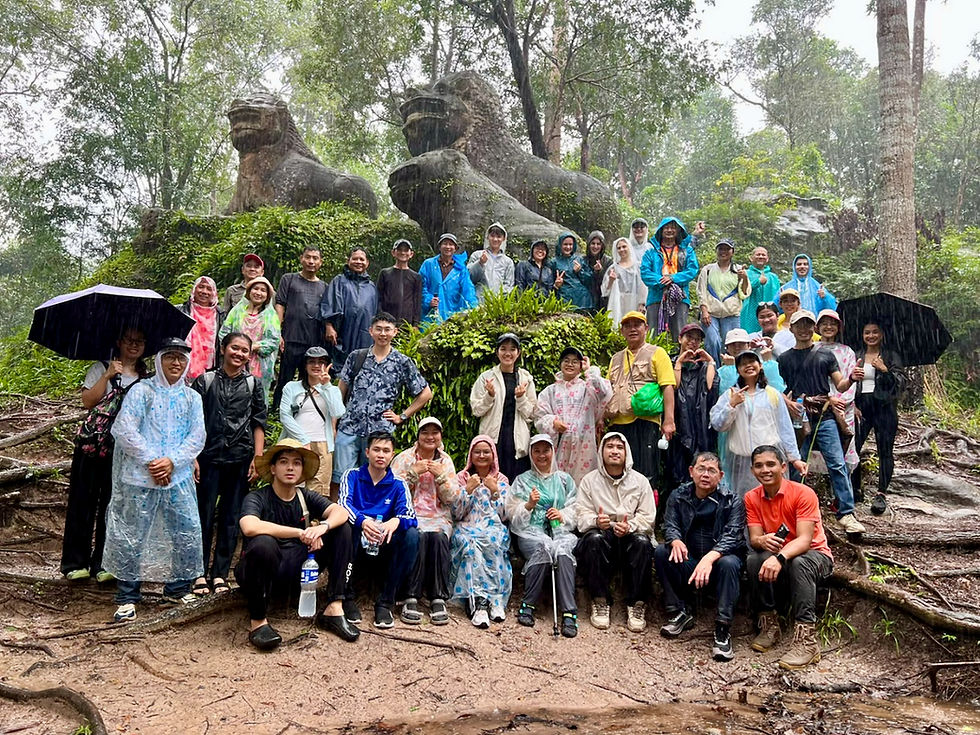
In the morning, Prof. Möhrlen bid farewell after successfully completing his mission with a lecture and a photo session. He said he looked forward to returning soon.
Warm regards from Siem Reap
Diogo


It’s inspiring to see how quickly you adapted and connected with the community! Building friendships can truly enrich your experience, much like finding the perfect name with a warrior cat name generator.
Medical missions show this real sharp contrast between big global health theories and what actually happens in day to day clinical life. When you’re dealing with resource limits in a local hospital, those standardized protocols from medical textbooks can feel totally detached from ground reality, like they were written for another planet. Converting the messy field observations into something truly robust and evidence-based academic research is incredibly hard. I often watch medical residents struggle to connect the dots they might need an editorial consultant, or even a medical thesis writing service, just to take their clinical data and turn it into a usable global health dissertation.
The concept is simple, yet eggy car manages to stay interesting because every hill requires a different approach. Definitely a nice pick for casual gaming.
Thank you for sharing your insights on medical missions, especially those in underserved areas. The personal stories and challenges you highlighted really resonate. I wonder if including more about the cultural context of your level devil game experiences might further enrich understanding for future volunteers! It’s inspiring work looking forward to part two!